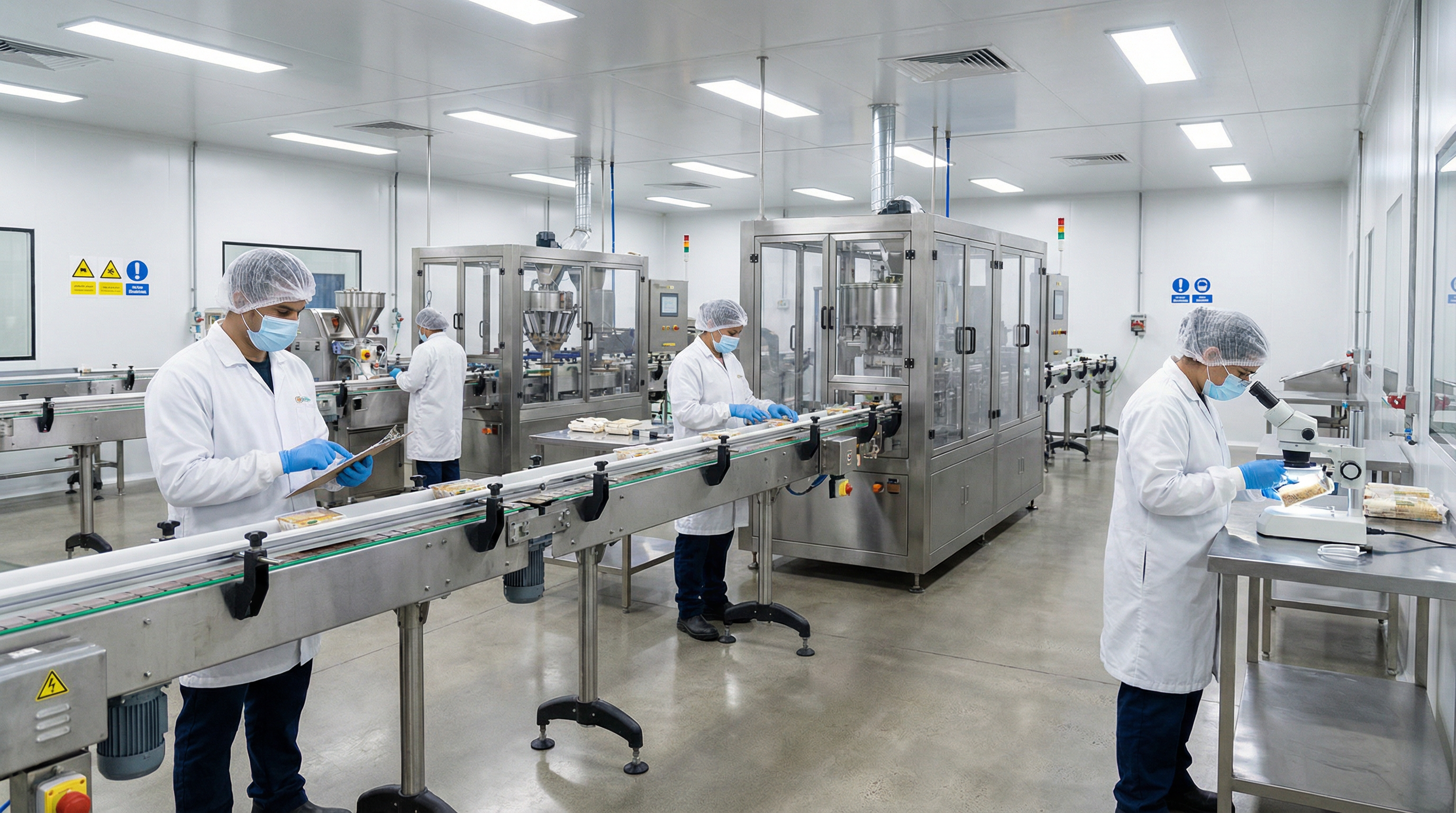
Food manufacturing facility

FSMA 204 Readiness Starts Before FDA Asks for Records

This is no longer just a traceability awareness topic. If your facility handles foods on the Food Traceability List, readiness now depends on whether your records, lot logic, and software workflow can hold up under real recall and regulatory pressure.

The Communication

The Message Right Now: Be Ready

FSMA is the Food Safety Modernization Act. FSMA 204 is the FDA's Food Traceability Rule for certain foods on the Food Traceability List. It is about recordkeeping, traceability lot codes, Critical Tracking Events, Key Data Elements, and how fast a company can reconstruct product history when something goes wrong.

FDA's own message is not “wait until the last minute.” Facilities should already be identifying covered foods, mapping events, cleaning up records, talking to supply chain partners, and making sure their systems can produce usable information under pressure. If your data lives across spreadsheets, paper logs, inboxes, ERP exports, and tribal knowledge, that is a readiness problem.

FDA says the original compliance date was January 20, 2026. As of May 4, 2026, FDA also says it proposed moving the date to July 20, 2028, Congress directed FDA not to enforce before that same date, and FDA intends to comply. That changes enforcement timing, but it does not change the operational work companies need to do now.

Regulatory Signal

Section 204 of FSMA

The FDA Food Traceability Rule implements Section 204(d) of FSMA and adds recordkeeping requirements beyond general existing records requirements.

Operational Reality

Traceability Is a System

The rule focuses on Critical Tracking Events, Key Data Elements, lot codes, and a documented traceability plan, but those only work if the underlying record system actually connects them.

Who Should Care

Certain Foods Only

It applies to firms that manufacture, process, pack, or hold foods on the Food Traceability List, subject to exemptions and modified requirements.

Why Software Matters

Retrieval Speed

FDA expects records within 24 hours and may require an electronic sortable spreadsheet when needed to support outbreak, recall, or public health response work.

What Readiness Means

Core FSMA 204 Requirements

If your products fall on the Food Traceability List, readiness is not just “having procedures.” Your operation needs record architecture that proves where product came from, what happened to it, and how fast your team can reconstruct that history.

1

Identify Covered Foods

Determine whether you manufacture, process, pack, or hold foods on the FDA Food Traceability List. This is the first decision point because the rule does not apply equally to every food product.

2

Map Your Critical Tracking Events

Document the specific events you perform in the supply chain - such as receiving, transformation, shipping, cooling, or initial packing - and clarify where traceability data must be captured inside the systems your team actually uses.

3

Capture Key Data Elements

At each applicable Critical Tracking Event, your records must preserve the required Key Data Elements and keep them linked to the relevant product and lot history. If teams are manually rekeying or copying data between systems, that link breaks fast.

4

Manage Traceability Lot Codes

When your operation is responsible for assigning traceability lot codes, the lot structure and supporting records must be consistent, understandable, and usable under real recall pressure. Lot logic that only one person understands is not readiness.

5

Maintain a Traceability Plan

You need a written traceability plan describing how records are kept, how covered foods are identified, how lot codes are assigned when applicable, and who owns the process internally. That plan should match your software workflow, not contradict it.

6

Be Ready to Produce Records Fast

FDA expects the required records to be made available within 24 hours of request, or within another reasonable time agreed to by FDA. The rule also contemplates an electronic sortable spreadsheet when needed. That means your system has to work in practice, not just on paper.

7

Pressure-Test Recall Readiness

Traceability only matters if your team can execute under pressure. Mock recalls, lot tracing drills, document retrieval tests, and clear ownership are what turn compliance into a functional system.

Software Matters

FSMA 204 Is Also a Software Decision

The rule does not say you must buy a specific platform. But in practice, compliance depends on whether your recordkeeping system can connect data across receiving, production, transformation, warehousing, shipping, and recall response.

Disconnected Records Create Risk

When data is split across paper logs, spreadsheets, inboxes, ERP notes, shared drives, and individual memory, retrieval becomes slow, inconsistent, and fragile exactly when time matters most.

Traceability Requires Data Linkage

CTEs, KDEs, and traceability lot codes only help if they remain linked across the product flow. Software and digital workflow design are often what preserve that linkage at scale.

FDA Response Is an Output Test

The question is not whether you “have software.” The question is whether your system can produce a usable, sortable, understandable record set within the time FDA expects during an outbreak or recall.

What This Means Operationally

FSMA 204 compliance is not just a legal interpretation exercise. It is a record-system design exercise. For many facilities, readiness means standardizing software inputs, clarifying data ownership, tightening lot-code logic, and reducing the number of manual handoffs needed to reconstruct product history.

Clear Up the Acronyms

FSMA vs. HACCP vs. PCQI

These topics overlap, but they are not the same thing. Most confusion comes from treating a law, a methodology, and a job qualification like they are interchangeable.

FSMA

FSMA is the federal food safety law. It created multiple FDA rules, including Preventive Controls and the Food Traceability Rule. FSMA 204 sits under that broader legal framework.

HACCP

HACCP is a hazard analysis and control methodology. It helps you identify hazards and define controls in the production process, but it is not the same as the FSMA 204 traceability recordkeeping rule.

PCQI

PCQI is the qualified individual role under FSMA Preventive Controls. A PCQI oversees the food safety plan, but FSMA 204 traceability readiness is still its own operational requirement.

Who Needs It

Who Needs FSMA 204 Readiness?

FSMA 204 is not a generic food safety topic. It matters most to facilities and teams that touch covered foods and need traceability, record retrieval, and software workflow to hold together across receiving, production, warehousing, and shipping.

Quality & Food Safety Leaders

If you're responsible for documentation, traceability, recalls, or audit readiness, FSMA 204 affects how you structure records and how quickly you can retrieve them when a regulator asks.

Operations, Warehouse & Shipping Teams

Traceability breaks down fast when receiving, transformation, repacking, or shipping are handled inconsistently. Operations ownership is essential if the records are going to match the real product flow.

Facilities Handling FTL Products

If your products are on the Food Traceability List - or contain listed foods that remain in the same form - this is not optional background reading. Your recordkeeping model needs to be deliberate.

Teams Preparing for Recalls or Buyer Scrutiny

Even before FDA enforcement pressure, retailers, customers, and internal leadership want proof that you can trace product quickly and respond cleanly during an incident.

Readiness Support

Get Ahead of FSMA 204 Now

The fastest way to get clear on FSMA 204 is to review your actual products, lot flow, records, and software process now, before a regulator, customer, or recall event tests them for you.

FSMA 204 Traceability Readiness Assessment

A focused review of whether the rule applies to your products, where your Critical Tracking Events live, what Key Data Elements you already capture, and where your traceability or software workflow is still exposed.

Request FSMA 204 Assessment →

Best for facilities that need a clear gap assessment before revising traceability procedures, data flow, or system ownership.

FSMA 204 Traceability Plan & Record Support

Hands-on help structuring your traceability plan, lot code logic, recordkeeping workflow, software handoffs, and retrieval process so your team can perform under audit, recall, or outbreak pressure.

Request Traceability Plan Support →

Best for teams that already know the rule applies and need implementation support, mock recall drills, or record-system cleanup.

Need the official source language? Review the FDA's Food Traceability Rule page for current implementation updates, CTEs, KDEs, exemptions, and compliance timing.

We Help You Build FSMA 204 Readiness Into the Actual System

Most FSMA 204 problems are not legal interpretation problems - they are execution and system-design problems. Records live in too many places, lot logic is inconsistent, transformations are poorly documented, and nobody has pressure-tested retrieval time. MI Consulting Group helps you map the product flow, tighten the records, align the traceability plan with your software and workflows, and rehearse recall response before the real pressure arrives.